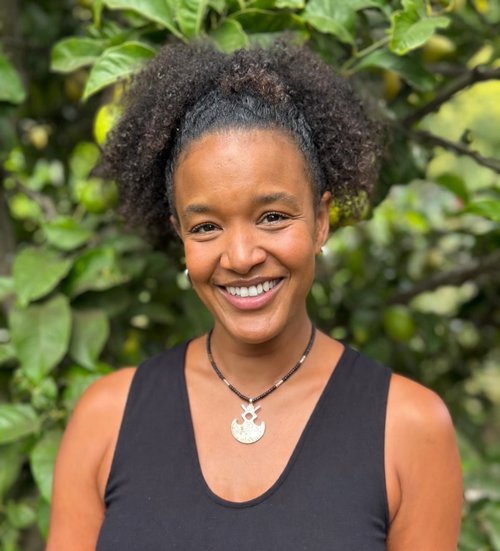
Portrait of Aïcha Cissé smiling outdoors among green leaves

Aïcha Cissé, PhD

Humanistic, Afrocentered & Multicultural PsychotherapyHealing & Growth for Individuals, Couples, and Families

My Approach

Unfamiliar with a term or need a refresher? Hover over highlighted words for a brief definition.

Welcome! I’m Dr. Aïcha Cissé. My approach to psychotherapy is warm, relational, culturally grounded, and collaborative. I believe healing happens not only within individuals, but also within relationships, families, communities, and the larger social worlds people navigate every day. In our work together, I aim to create a space where clients feel deeply seen, emotionally safe, and supported in reconnecting with their own inner wisdom, resilience, and capacity for growth and self-fulfillment. I do not view people primarily through the lens of diagnoses, symptoms, or the problems that may have brought them to therapy, but rather seek to understand the whole person within the context of their relationships, family history, community, culture, and larger social world.

I view therapy as a collaborative and co-created process. Rather than positioning myself as the expert on someone else's life, I work alongside clients with curiosity, openness, and deep respect for their lived experiences, cultural knowledge, and personal insight. My style tends to feel conversational, interactive, and engaged while also grounded in careful listening, emotional attunement, and reflection. I show up authentically in the therapeutic relationship and believe healing is often supported through genuine human connection, trust, and the experience of feeling understood without judgment.

My work is rooted in a humanistic and person-centered approach, meaning that therapy begins with meeting people where they are, honoring their experiences, and building an authentic relationship grounded in empathy, respect, and care. I also draw from psychodynamic therapy to help clients better understand emotional patterns, relational experiences, and deeper processes that may continue to shape present struggles, ways of relating, and experiences of self. This includes exploring how early childhood experiences, attachment relationships, family dynamics, and past wounds may continue to influence present emotional life, relationships, self-perception, and coping patterns, often outside of conscious awareness.

Because emotional wellbeing is deeply connected to relationships and broader social environments, I integrate family systems perspectives that consider the ways family dynamics, intergenerational experiences, and relational roles influence emotional life. My approach is also informed by liberation-oriented and decolonizing psychologies, which recognize that experiences such as racism, oppression, migration, displacement, gender expectations, and systemic inequities can profoundly affect psychological wellbeing and relationships. Rather than viewing distress only as an individual problem, I believe therapy can also help people make meaning of the broader social, cultural, and historical contexts shaping their lives.

Multicultural therapy is another important foundation of my approach, recognizing that culture is inseparable from how people understand themselves, relate to others, and experience the world. I attend to the ways race, ethnicity, culture, language, migration, gender, sexuality, socioeconomic background, religion and spirituality, family traditions, and other intersecting identities may shape a person's values, relationships, sense of self, and emotional life. Rather than assuming a single framework for understanding wellbeing or healing, I approach each client with cultural humility and curiosity, honoring their own cultural knowledge and worldview. I remain attentive to both sources of cultural strength and the challenges that can arise from navigating multiple identities, communities, and cultural contexts.

Also at the heart of my work is an Afrocentered perspective that honors the strengths, histories, cultural knowledge, spirituality, creativity, resilience, and communal healing traditions within African, African American, Afro-Caribbean, and other Afro-diasporic communities. As a Black therapist of mixed ethnic and cultural heritage, I bring both my professional training and an understanding shaped by my own lived experiences of the importance of being seen within the fullness of one’s racial, cultural, and collective experiences. At the same time, I remain attentive and responsive to the unique identities and lived experiences of each individual, couple, and family I work with.

Overall, my therapeutic style is integrative and flexible, meaning I adapt the work to each client's developmental needs, identities, goals, strengths, and ways of understanding themselves and the world. Depending on each client's or family's self-identified needs, hopes, and therapeutic goals, we will collaborate in determining which combination of the approaches described above will best support a therapeutic process that feels meaningful, responsive, and attuned to their unique experiences and healing journey.

Bio

I am a clinical psychologist whose path to this work has been shaped as much by lived experience, culture, and community as by my formal training. I was born and raised in Switzerland to a Swiss mother and a father from Guinea, West Africa, who came to Europe as a political refugee. I moved to New York as a young adult, where I lived for over 20 years and spent most of my adult life. Growing up in a multicultural family, and later living and working in different countries and communities, sparked an early interest in the many ways that culture, family, identity, community, and social conditions shape how we understand ourselves and experience the world.

I earned my undergraduate degree from Columbia University, where I graduated summa cum laude with a double major in Psychology and Sociology, and later earned my PhD in Clinical Psychology from Fordham University, with concentrations in Child, Adolescent & Family Psychology and Forensic Psychology. My master's research explored how West African immigrant families navigate cultural differences across generations, while subsequent research examined resilience and coping with trauma among African refugee families. My doctoral dissertation examined the psychosocial impacts of the school-to-prison pipeline and other forms of institutionalized racism on African American, Afro-Caribbean, and Latino youth. Across this work, I have been particularly interested in centering people’s lived experiences and developing culturally meaningful ways of understanding psychological wellbeing, resilience, and healing among communities that have historically been underrepresented in psychological research.

Over the course of my clinical training, I have worked in community mental health clinics, hospitals, outpatient and inpatient settings, and community-based programs in New York and California. My work has included individual, couples, family, and group psychotherapy, as well as psychological and therapeutic assessment, with children, adolescents, adults, couples, and families from a wide range of racial, cultural, socioeconomic, and life experiences. A significant part of my career has been dedicated to working with historically underserved communities, including immigrant families, system-involved youth and their families, and people navigating trauma, marginalization, and complex social circumstances.

Before and alongside my work in psychology, I spent many years working with children, adolescents, and young adults in educational and community settings. I taught middle and high school in Switzerland, facilitated workshops with adolescents at Rikers Island Juvenile Detention Center in New York, and spent a year in Rio de Janeiro developing and managing a volunteer afterschool program for low-income and historically underserved communities. These experiences contributed to my longstanding commitment to working with young people and families and deepened my understanding of the larger educational, cultural, community, and social systems in which their lives unfold.

At Fordham University, I taught undergraduate courses in Multicultural Psychology, Family Psychology, and Infant & Child Development. I have also designed and provided multicultural competency training for mental health professionals and agency staff and have facilitated Afrocentered healing spaces through the Association of Black Psychologists' Sawubona Healing Circles. My broader professional development has included training in liberation psychology, decolonizing approaches to psychology and healing, restorative and transformative practices, community care, harm reduction, and culturally responsive approaches to healing.

These experiences across countries, cultures, clinical settings, classrooms, research, and community spaces have shaped the psychologist I am today. They continue to inform my commitment to providing care that recognizes the complexity of people's lives and honors the cultural knowledge, histories, relationships, communities, and strengths they bring with them.

Services & Fees

I currently provide therapy and assessment services to clients residing in California and New York states.

My approach allows for flexibility across individual, couples, and family therapy rather than treating them as entirely separate forms of treatment. Grounded in relational and decolonizing principles, I do not assume that healing must take place within one fixed therapeutic structure. Individual clients may invite partners, family members, children, or other significant people to participate in one or more sessions when helpful. Individual therapy may also evolve into couples or family therapy, while couples or family therapy may sometimes include individual sessions. Any change in the primary therapy modality will be the decision of the client or clients involved, and the therapeutic agreement will be adjusted accordingly.

Initial Session — Free of Charge

Finding the right therapist is an important part of the therapeutic process. I offer an initial session free of charge so that prospective clients have the freedom to experience what it feels like to work together, ask questions, and explore whether I may be a good fit before making a financial commitment. There is no obligation to continue; the intention is to give you the space to make that decision in a way that feels thoughtful and right for you.

Insurance & Payment

I am an out-of-network provider. Upon request, I can provide a superbill for possible reimbursement through your insurance plan. Reimbursement is not guaranteed and depends on your specific out-of-network benefits.

Individual Therapy$250 / 60 minutes

Individual therapy offers a space to slow down, explore what you are experiencing, and deepen your understanding of yourself and the patterns shaping your life. Together, we may explore relationships, identity, family and cultural experiences, life transitions, trauma, emotional challenges, and questions of meaning and belonging. Our work is collaborative and grounded in your strengths, inner wisdom, and capacity for healing and growth.

Couples Therapy$250 / 60 minutes - $320 / 90 minutes

Couples therapy provides a supportive space to better understand the patterns, experiences, and needs shaping your relationship. We may work on communication, intimacy, conflict, trust, major transitions, parenting, cultural or racial differences, and other challenges affecting the relationship. I approach couples work with curiosity and without assigning blame, while making space for each partner's experiences, identities, histories, and perspectives.

Family Therapy$250 / 60 minutes - $320 / 90 minutes

Family therapy focuses on strengthening relationships and creating greater understanding among family members. Together, we explore family dynamics, communication patterns, intergenerational experiences, cultural contexts, parenting challenges, transitions, and sources of conflict or disconnection. I work collaboratively with families to make room for different perspectives while supporting healthier and more connected ways of relating.

Group Therapy$100 per person / 90-120 minutes

Group therapy offers an opportunity for healing and growth through connection with others who may share meaningful aspects of an experience, identity, or life circumstance. Groups provide space for reflection, mutual support, learning, and community while allowing participants to recognize that many experiences we carry individually also exist within larger relational and social contexts. Depending on interest and demand, each group will generally include 4 to 8 participants. Topics may include navigating professional spaces as a person of color, healing from racial trauma as a person of color, exploring identity and belonging as a person of color, parenting as a person of color, navigating multiracial family relationships, and more.

Transracial Adoption Parenting Classes$300–$1,000 (variable flat fee)

These classes support adoptive parents and caregivers raising children across racial and cultural differences. Topics may include racial and cultural identity development, belonging, attachment, responding to racism and bias, talking openly about race, supporting connections to a child's communities and cultures of origin, and examining how parents' own identities and experiences shape family life. Classes are tailored to the needs and developmental stage of the participating families.

Psychological Testing$1,500–$3,000 (variable flat fee)

Psychological testing can help clarify specific questions about emotional, behavioral, developmental, cognitive, or psychological functioning. The scope of testing is tailored to the referral question and may include clinical interviews, standardized measures, interpretation, feedback, and recommendations. Fees vary according to the complexity and scope of the evaluation. My approach is grounded in a social justice-oriented lens that considers the cultural, relational, and systemic contexts shaping a person's experiences. When appropriate, recommendations are designed not only to deepen understanding, but also to support individuals and families in advocating for the resources, accommodations, and support they need at school, in the workplace, or within other systems.

Comprehensive Psychological Assessment / Collaborative Therapeutic Assessment$3,000–$5,000 (variable flat fee)

Comprehensive psychological assessment offers a deeper exploration of complex psychological, relational, developmental, or diagnostic questions. I use a Collaborative/Therapeutic Assessment approach, in which clients are active participants in the assessment process. Rather than testing being something that is simply done to clients, we develop meaningful questions together and use interviews, psychological measures, and ongoing conversations to explore them.

The goal extends beyond diagnosis. Assessment can become a therapeutic process in itself, helping clients develop a more compassionate and nuanced understanding of their experiences, recognize strengths and patterns, and identify possibilities for healing and change. Findings are explored collaboratively and translated into recommendations that are meaningful and useful in clients' lives.

A social justice-oriented lens is embedded throughout this work, with attention to how culture, identity, relationships, and social and institutional systems shape both clients' experiences and the ways those experiences may be understood or labeled. When appropriate, the assessment can also provide documentation and recommendations to help clients advocate for needed resources, accommodations, and support at school, in the workplace, or within other systems.

Reduced-Fee & Pro Bono Services

As part of my commitment to social justice, community care, and equity in mental health, I reserve a limited number of reduced-fee and pro bono appointments for those who might otherwise be unable to access the type of specialized services offered by this practice. Because my ability to provide pro bono care depends on the sustainability of the practice, reduced-fee and pro bono spaces are limited and subject to availability.

Prospective clients are welcome to contact me via email to inquire about reduced-fee availability and, if no openings are available, request placement on the waitlist for future openings. Pro bono appointments are typically offered through referrals from professionals, community organizations, and other trusted partners. Priority is generally given to system-involved youth and young adults.

All services are provided by Aïcha Cissé, PhD, a sole proprietor and licensed psychologist.

Areas of Therapy Focus

Therapy can create a space to explore many different aspects of our emotional, relational, cultural, and social lives. Rather than approaching these experiences simply as symptoms or problems to be treated, I seek to understand them within the context of the whole person: their relationships, family history, identities, culture, community, and larger social world.

The areas below reflect some of the experiences and concerns that may be explored in our work together. How we approach them will be collaborative and responsive to each client's experiences, strengths, needs, worldview, and hopes for therapy.

Personal Growth & Emotional Wellbeing

Individual Growth & Healing

Therapy does not have to begin with something being "wrong." It can be a space to understand yourself more deeply, reconnect with parts of yourself that may have become difficult to access, and explore what you want for your life. Our work may include emotional and relational patterns, past experiences, values, strengths, relationships, and sources of meaning while supporting greater self-understanding, healing, and growth. Your own beliefs, spirituality, cultural knowledge, and ways of understanding yourself and the world will remain at the center of this process.

Life Transitions

Transitions can disrupt familiar roles, relationships, routines, and ways of understanding ourselves. Whether navigating a move, career change, migration, parenthood, relationship shift, or another turning point, we can explore both what is being left behind and what is emerging, while considering how the transition intersects with your identity, relationships, culture, values, and hopes for the future.

Existential Crisis

Questions about meaning, purpose, mortality, freedom, identity, or the direction of one's life can become deeply unsettling. Rather than rushing to resolve these questions, therapy can offer a space to explore what they may reveal about your values, needs, relationships, and ways of understanding yourself and the world.

Grief

Grief can follow death as well as the loss of a relationship, community, identity, home, possibility, or way of life. Therapy can make room for grief without expecting it to follow a particular timeline, while exploring the meaning of what has been lost and the relationships, histories, cultural traditions, and sources of connection surrounding that loss.

Self-Acceptance & Self-Fulfilment

From a humanistic perspective, therapy can support the process of becoming more fully yourself. We may explore what makes it difficult to accept or trust parts of yourself, what feels meaningful and authentic to you, and how you might reconnect with your inner wisdom, strengths, desires, and capacity for growth and self-fulfilment.

Stress & Trauma

Stress and trauma can affect emotions, relationships, the body, and our sense of safety and belonging. Trauma-informed and culturally responsive therapy offers space to explore these experiences at a pace that feels manageable, while attending to the relational, cultural, and social contexts in which they occur and honoring the strengths and ways of surviving that have helped you through them. For some, healing may involve revisiting difficult experiences and processing related emotions, while for others it may involve attending to those emotions in ways that do not require revisiting the experiences themselves. Therapy can also support you in recognizing triggers and exploring ways to respond that help you feel grounded, safe, and more in control. This work recognizes diverse ways of coping and healing, making room for relationships, spirituality, creativity, cultural practices, and collective care.

Substance Use & Harm Reduction

A harm reduction approach meets clients with compassion, curiosity, and respect rather than judgment or shame. It recognizes that each person’s relationship with substances is shaped by their experiences, needs, relationships, culture, and social environment. Whether seeking complete abstinence, reducing substance use, or exploring how it affects your life, therapy can provide a collaborative space to explore what feels possible, strengthen safety, understand underlying needs, and make meaningful changes at your own pace.

Mood & Personality Disorders

Diagnostic language can sometimes help describe patterns of experience, but a diagnosis does not define a person. When working with concerns associated with mood or personality diagnoses, we may explore emotional and relational patterns alongside attachment, past experiences, family history, identity, culture, environment, and ways of coping that developed over time. The focus remains on understanding your particular experience rather than reducing you to a diagnostic label.

Relationships, Family & Development

Couples & Relationship Issues

Rather than locating the problem in one partner, we may explore the patterns that develop between people: communication, conflict, intimacy, trust, attachment, expectations, and experiences of connection or disconnection. We may also consider how each person's family history, culture, identities, past relationships, and broader social experiences enter the relationship.

Family & Parenting Issues

Families are interconnected systems in which each person both affects and is affected by others. Therapy may explore communication, parenting, attachment, boundaries, relational roles, conflict, and intergenerational patterns while making room for different perspectives and considering the cultural traditions, values, histories, and social environments shaping family life.

Adolescent & Young Adult Development

Adolescence and young adulthood can bring profound changes in identity, independence, relationships, belonging, and one's understanding of the world. Therapy can offer young people space to explore these experiences without reducing them to behaviors or problems, while attending to family relationships, peers, school, culture, identity, community, and the larger environments in which development unfolds.

Pregnancy, Prenatal & Postpartum

Pregnancy and the transition to parenthood can bring joy alongside vulnerability, uncertainty, changing identities, relationship shifts, and the resurfacing of earlier family experiences. Therapy may explore the emotional complexity of this period, including expectations about parenthood, attachment, family and cultural messages, relationships, support systems, and changing experiences of self.

Divorce

Divorce can involve grief, anger, relief, uncertainty, changing identities, and major shifts in family relationships. Therapy can provide space to process what the relationship and its ending have meant while navigating changing roles, parenting or co-parenting, family transitions, and the emotional experiences of those affected.

Blended Families

Blended families bring together different histories, attachments, traditions, loyalties, and expectations about what family should look like. Therapy may help family members understand these different experiences, navigate new roles and boundaries, strengthen relationships, and develop ways of being a family that make room for both longstanding bonds and new connections.

Race, Culture, Identity & Belonging

Race, Culture & Belonging

Race and culture can shape how we understand ourselves, where we experience belonging, and how we move through relationships and the world. Therapy may explore cultural connection and disconnection, navigating multiple communities or identities, experiences of being "between" cultures, and the cultural knowledge, traditions, creativity, resilience, and sources of strength carried through families and communities.

Racial, Ethnic & Cultural Identity

Racial, ethnic, and cultural identities develop through family, relationships, communities, histories, and experiences within the larger social world. Therapy can provide space to explore pride, belonging, ambiguity, conflict, mixed or multiple identities, cultural connection and disconnection, and evolving understandings of who you are.

Cultural Adjustment

Moving between cultural environments can involve possibility and growth alongside loss, disorientation, and questions of belonging. We may explore migration, language, family expectations, changing roles and values, cultural differences, and the experience of navigating multiple cultural worlds without assuming that adjustment requires leaving important parts of yourself or your culture behind.

Transracial Adoption

Transracial adoption involves attachment and family relationships alongside important questions of race, culture, identity, belonging, loss, and connection. Therapy can create a space for adoptees and families to explore racial differences within the family, experiences of racism, cultural connection or disconnection, relationships with families and communities of origin, and the development of racial and cultural identity.

Gender Identity

Therapy can provide an affirming space to explore gender without assuming what your identity should mean or where that exploration should lead. We may consider identity, embodiment, relationships, family and cultural expectations, belonging, experiences of affirmation or discrimination, and the ways gender intersects with race, culture, sexuality, spirituality, and other parts of who you are.

LGBTQIA+

LGBTQIA+ clients are invited to bring their whole selves into therapy without sexual orientation or gender diversity being treated as something to explain or justify. Our work may explore identity, relationships, family, intimacy, belonging, discrimination, community, and the intersections of sexuality and gender with race, culture, spirituality, and other identities. Therapy can offer a space to deepen self-understanding, navigate challenges, strengthen relationships, and move toward a life that feels more authentic, connected, and affirming.

Discrimination, Oppression & Historical Trauma

Prejudice, Discrimination & Racism

Experiences of racism and discrimination can affect emotional wellbeing, relationships, safety, belonging, and sense of self. Therapy can offer a space to name and process these experiences without automatically locating the source of distress within the individual, while also attending to identity, community, resistance, cultural strengths, and resilience. Afrocentered therapy can also help empower you to draw upon cultural knowledge, ancestral strengths, and community as sources of healing, resistance, and self-determination.

Cultural & Systemic Oppression

Distress does not occur in isolation from the world around us. Drawing from liberation-oriented and decolonizing perspectives, therapy may explore how racism, oppression, migration, displacement, gender expectations, socioeconomic conditions, and systemic inequities affect emotional life and relationships. This can include distinguishing between struggles located within ourselves and suffering shaped or intensified by the environments and systems we navigate.

Intergenerational & Historical Trauma

Some adverse or traumatic experiences reverberate across generations and are carried through family, ancestral, cultural, racial, and collective histories. Therapy may explore how the experiences of our families, ancestors, racial or ethnic communities, and broader histories of migration, displacement, racism, colonization, community violence, loss, and survival continue to shape relationships, identity, fears, expectations, and ways of coping in the present. At the same time, Afrocentered therapy also honors what is carried forward across generations as strength: cultural knowledge, spirituality, creativity, resistance, resilience, and traditions of communal healing.

White Privilege

For White clients, therapy can include exploration of racial identity, socialization, privilege, and the ways race and systemic inequities enter relationships, families, parenting, workplaces, and everyday life. This exploration can be approached with curiosity, openness, and accountability, supporting greater self-awareness and more intentional ways of relating across racial and cultural differences. Therapy can create a space for becoming more aware of Whiteness and the privileges it carries without judgment or shame, allowing for honest reflection, deeper understanding, and meaningful growth.

Diverse Ways of Experiencing the World

Neurodivergence

Therapy can approach neurodivergence from an affirming perspective rather than automatically treating difference as deficit. We may explore your particular ways of experiencing and moving through the world, including strengths, needs, relationships, identity, sensory and emotional experiences, and the effects of navigating environments or expectations that may not fit the way you think, communicate, connect, or process experience. When helpful, we can also explore ways to support and empower you in advocating for your needs and seeking possible accommodations at work, school, or home.

Hearing Voices & Unusual Beliefs

Hearing voices, having visions, or experiencing beliefs that others may understand as unusual does not have to be approached solely as a symptom to eliminate. Therapy can offer a respectful space to explore these experiences in your own language, including what they mean to you, their relationship to your life experiences, and their cultural, spiritual, relational, or personal significance. Different ways of understanding these experiences can be held with curiosity while we work together to reduce distress, strengthen your sense of agency, and identify ways of living with or making sense of experiences that may at times feel overwhelming.
Professional Services

In addition to my clinical practice, I provide consultation and training to professionals, organizations, agencies, and other community-based settings. My work draws on clinical psychology, multicultural and Afrocentered psychology, humanistic, decolonizing and liberation-oriented frameworks, and experience working across diverse cultural and community contexts.

Trainings and consultations are collaborative and tailored to the needs, population, and goals of each organization. Professional services, including agency trainings and workshops, may be offered online or in person throughout the United States, depending on location and availability.

Professional Consulting$250–$350 / hour

I provide consultation to clinicians, organizations, agencies, and other professionals seeking support around clinical practice, program development, culturally responsive care, complex cases, organizational questions, or work with diverse communities. Consultation can be offered as a single meeting or as an ongoing collaboration depending on the needs of the individual or organization.

Equity, Diversity & Anti-Racism Training$1,000–$5,000 (variable flat fee)

Equity, diversity, and anti-racism training provides a space for organizations and professionals to examine how race, culture, gender, sexual orientation, gender identity, disability, socioeconomic status, power, privilege, and other dimensions of identity and difference shape interpersonal relationships, professional practice, organizational culture, and access to care and opportunities.

Training modules combine reflection, dialogue, psychological understanding, and practical application, with attention to racism, ableism, sexism, homophobia, transphobia, and other forms of discrimination and systemic inequity. The emphasis is on moving beyond awareness toward meaningful changes in professional practice, organizational culture, policies, and relationships.

Multicultural Competency Training$1,000–$5,000 (variable flat fee)

Multicultural competency trainings support professionals and organizations in developing more culturally responsive, reflective, and effective ways of working across differences. Trainings may explore culture, race, ethnicity, identity, migration, power, privilege, implicit assumptions, intersectionality, and the ways broader social and historical contexts enter clinical and organizational spaces.

Rather than approaching cultural competency as a checklist, I emphasize curiosity, humility, self-reflection, relationship, and an ongoing capacity to understand experiences and worldviews different from our own.

Customized Training & Workshops

Training and workshops can be developed around the particular needs of an organization, team, or community. Topics may include multicultural and culturally responsive practice, racial identity, working across racial and cultural differences, anti-racist professional practice, power and privilege, identity and belonging, and related areas.

Fees vary according to the length, scope, preparation, customization, and size of the training or consultation.

All services are provided by Aïcha Cissé, PhD, a sole proprietor and licensed psychologist.

Contact

I currently provide online therapy and assessment services to clients residing in California and New York states. Professional services, including agency trainings and workshops, may be offered online or in person throughout the United States, depending on location and availability.

If you are interested in therapy, assessment, or professional services, I welcome you to reach out. You can email me at dr.aichacisse.psy@gmail.com or complete the contact form below.